
“Now we can reinvent Usinesonore!”

The small and eclectic Usinesonore festival in the Bernese Jura should have taken place from June 10 to 13. Unfortunately the new resolutions and guidelines issued by the authorities and allowing certain smaller events to take place came have been communicated slightly too late, even if the new rules would have applied precisely from the first day of the festival onwards. This is all the more painful as the festival is only a biennial event and we may have to wait until 2022 for the next edition. On the other hand, the Les “Battements de l’Abbatiale” concert series in Bellelay will be taking place.
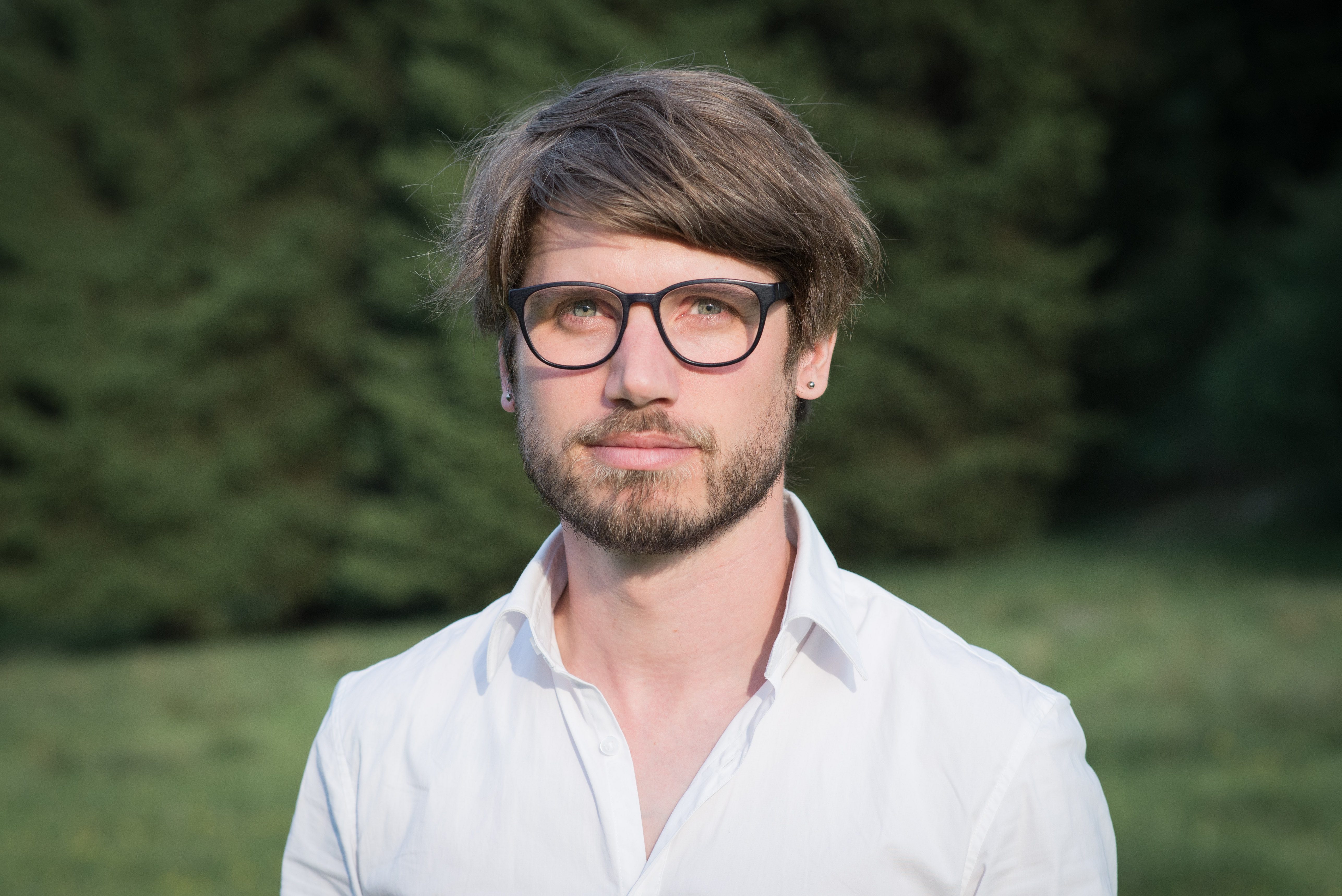
Portrait: Julien Annoni©Lucas Dubuis

Julien Annoni, co-director of Usinesonore and director of Les Battements de l’Abbatiale, tells us about new opportunities during these Covid-19 times and why streaming cannot be considered an option for these kinds of events.

Interview: Bjørn Schaeffner

Julien Annoni, Usinesonore was to take place from 9 to 13 June. What will we miss out on?
As always, a diverse programme ranging from contemporary music to traditional music and other artistic disciplines. We try to keep things as close as possible to the audience. As for the big names: Among others, a concert with Renaud Capuçon. Plus we had designed a wonderful tent again, especially for this year’s edition.

When did you realise that the festival had to be cancelled?
Early April. Two months before the official start of the festival was the very last deadline we had set, in order to keep things as harmless as possible organization wise.

Now the lockdown is over…
I’m glad, of course. It’s positive signal for Switzerland and for all those who work in the cultural field!

Doesn’t it bother you that the festival could theoretically have taken place? The authorities just decided that events with up to 300 people will be allowed again from June, 6 onwards.
The only possible way would have been to reduce Usinesonore and we knew from the beginning that this was not an option. Under these circumstances, the atmosphere of the festival would have been distorted.


Usinesonore 2018, Gérard Grisey, Le noir d’étoiles, WeSpoke

Why is that?
Because it would have happened at the expense of quality and we don’t want any compromise on that aspect.

But again: Isn’t it annoying to miss it all by a hair’s breadth?
It’s of course a pity. We had already put a lot of heart and soul into it. But in hindsight, one’s always much smarter.

What does the cancellation of the festival mean for you financially?
We’re doing relatively well. The Canton of Berne as well as the majority of the foundations supporting the festival have been very accommodating and kept their subsidies and contributions.

And what does it mean for the artists?
We can pay a large part of their fees and production costs and thus partly compensate for their work loss.

You have made the Biel festival premises which have become vacant, available to other artists free of charge.
Yes, of course, we did that very spontaneously so that people can rehearse there, or work on productions. Artists will be working there until the end of July, be it just for a few days or a week. Among others, Collective Mycelium, Camille Emaille, Lucie Tuma, Paquita Maria or Adrien Gygax with lot of enthusiasm even if nothing will be presented to the public!
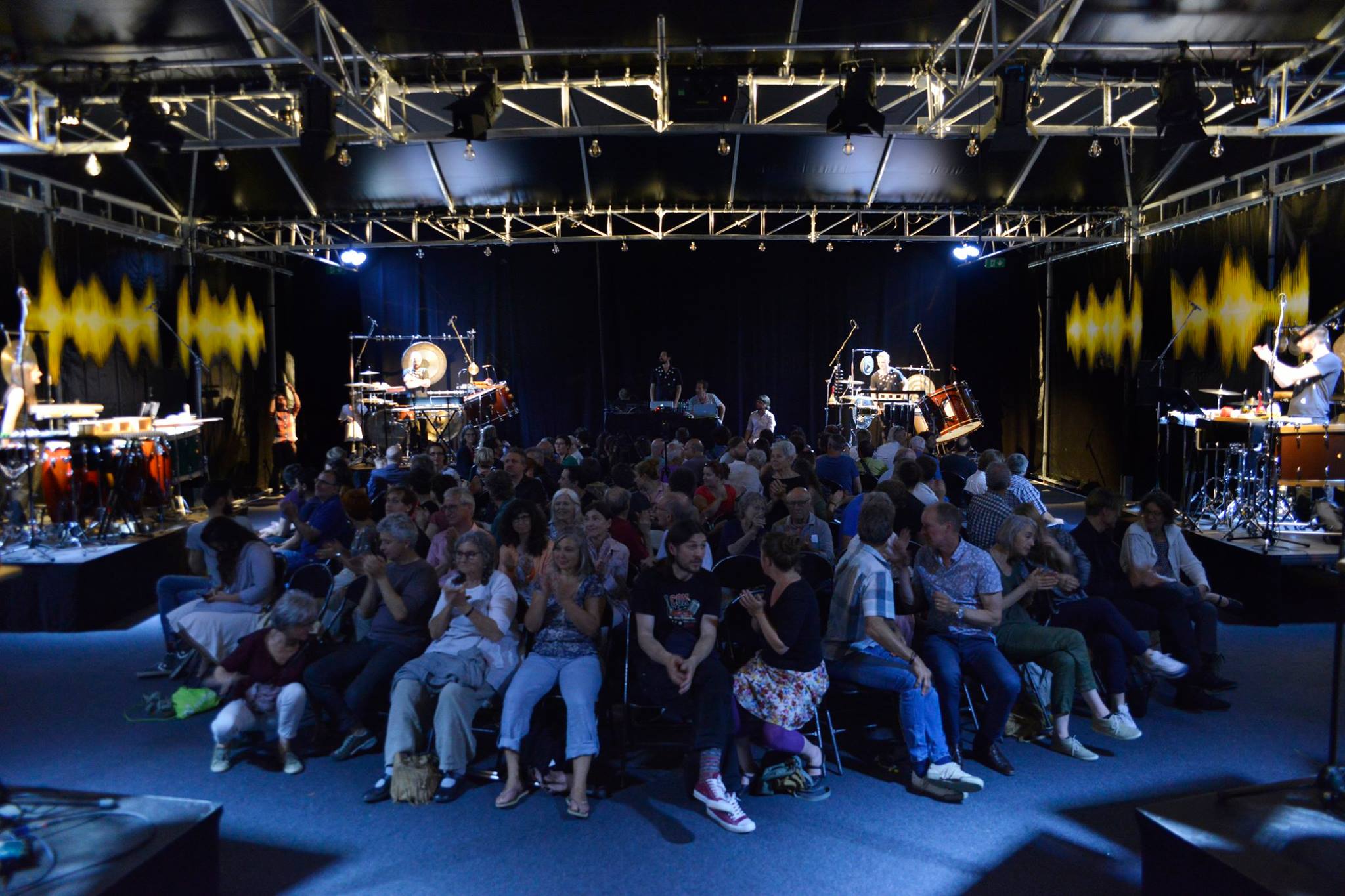
Usinesonore Festival 2018

Are you, as a musician, affected by the crisis yourself?
I sure felt it financially. On the other hand, I enjoyed spending more time with my family, as in normal times I am on the road a lot.

A streaming Usinesonore was never an option?
We thought about the possibility, but decided against it. Usinesonore lives from the exchange with the audience and the whole atmosphere, which could never be replaced by a streaming format.

Trailer Usinesonore Festival 2014

Can you imagine digital formats for Usinesonore in the future?
Yes, definitely, but the outcomes are completely open. We are brainstorming, researching and setting bases something new.

Will Usinesonore take place next year?
It might, but it could also not take place until 2022. We don’t know yet. We are taking advantage of the time at hand, to intensively think about how the festival could be shaped in the future.

So you see this crisis as an opportunity?
Right. It is quite unique to get the chance to completely reinvent a festival.
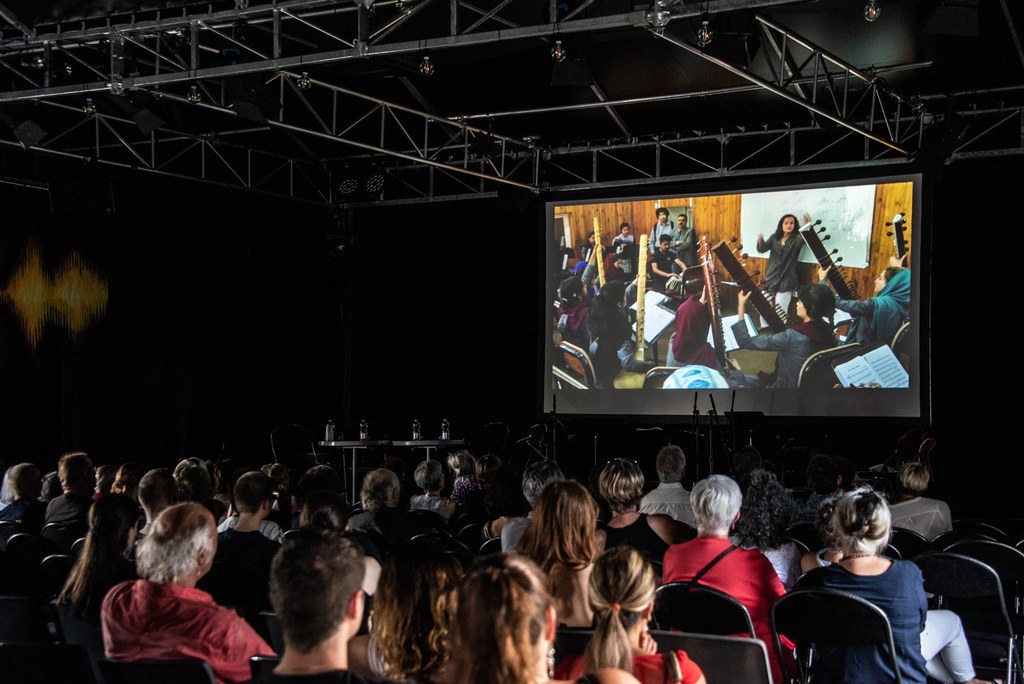
Usinesonore Festival 2018

What else are you looking forward to?

To the concerts in the historical abbey of Bellelay, but those have nothing to do with Usinesonore. It is the result of three years of work, a season of ensemble concerts – I had invited Carine Zuber (Moods), Claire Brawand (Label Suisse) and Arnaud Di Clemente (Cully Jazz) as programmers. We had to cancel the part of the season, but at least some of the planned events between end of August and mid-September will take place.
Bjørn Schaeffner

Usinesonore Festival takes place biennially in June in La Neuveville. The next planned edition is in 2022.

The “Les Battements de l’Abbatiale” concert series will take place – as one of the first events in the Jura – from 29 August (Ensemble Contrechamps Genève) onwards.

Usinesonore Festival, Les Battements de l‘Abbatiale, Julien Annoni/WeSpokeKollektiv Mycelium

Neo-Profiles: Usinesonore Festival, Les Battements d’Abatiale, WeSpoke, Kollektiv Mycelium
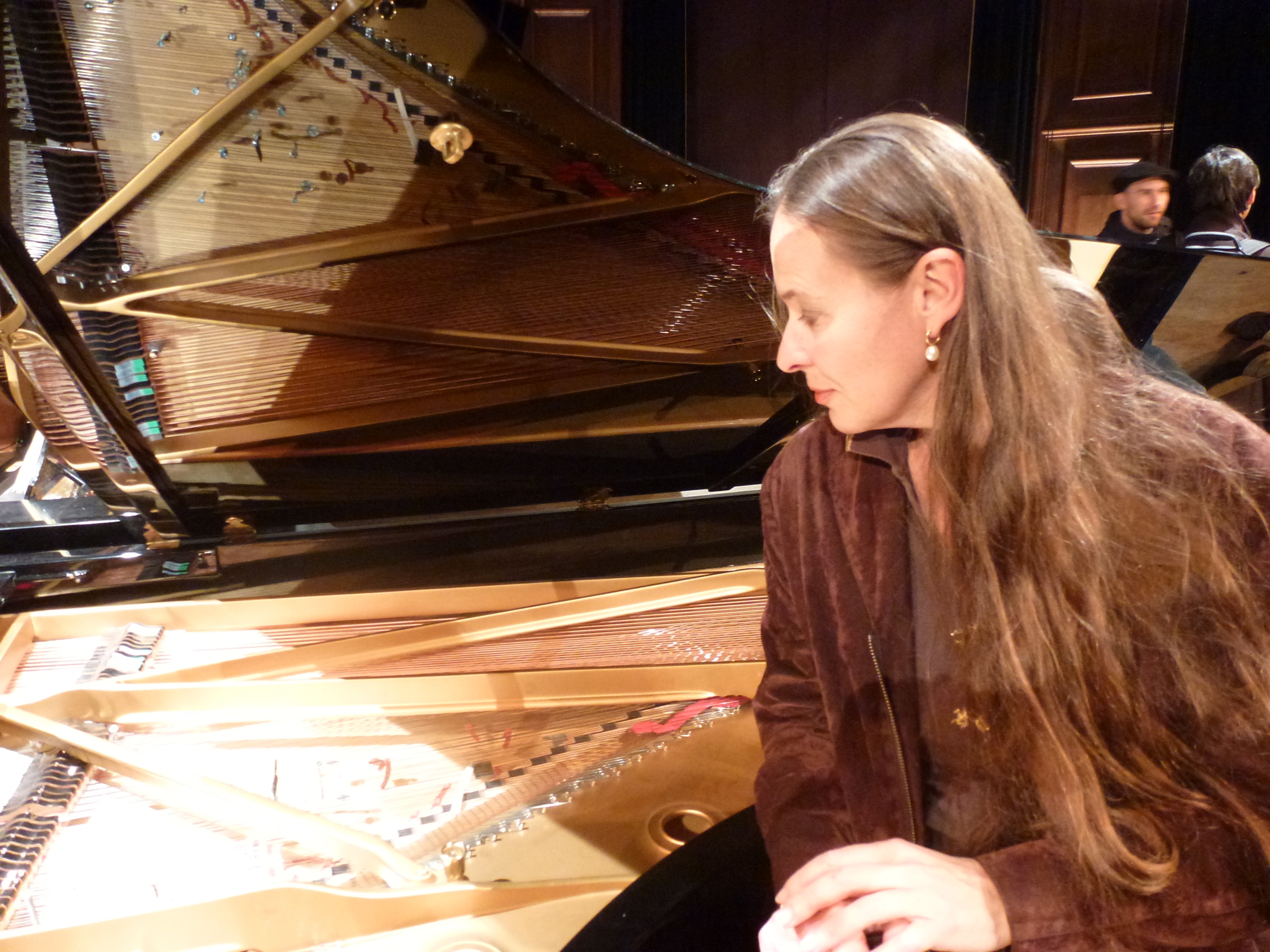
“Job suffers for no reason”

Michèle Rusconi will premiere her composition “Les Souffrances de Job” at Basel’s Gare Du Nord. In this interview, she explains how the tragedy by Hanoch Levin has been adapted.

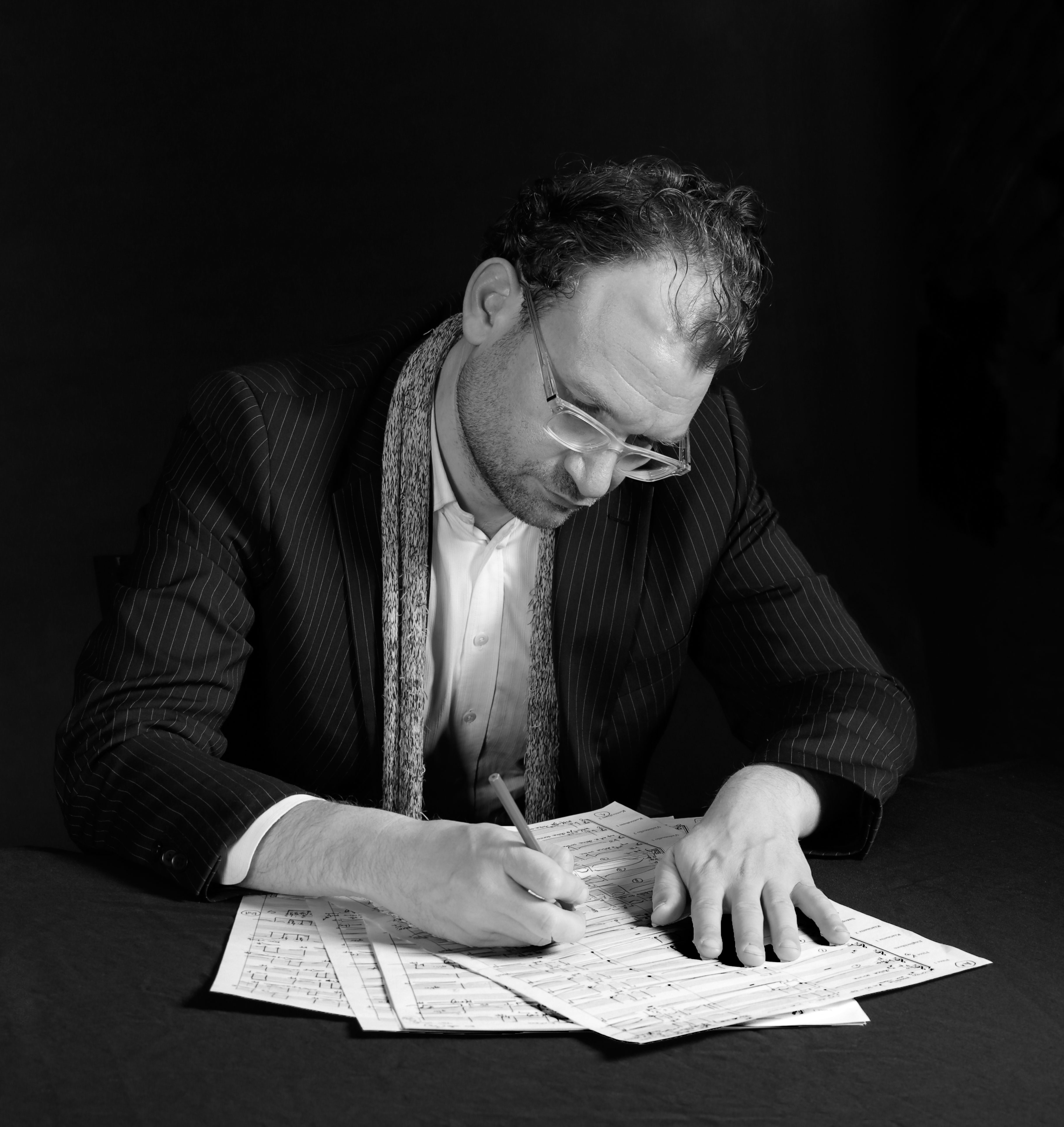
The composer: Michèle Rusconi

Björn Schaeffner
Michèle Rusconi, what fascinates you regarding Hanoch Levin’s text “Les Souffrances de Job”?
I consider Hanoch Levin one of the world’s most important authors of the second half of the 20th century. I am fascinated by his grandiose language, his wit, his satire and his bitter black humour, which allow him to speak the unspeakable.

How do you mean?
I admire Levin’s sharp, uncompromising gaze, while at the same time I fear the mirror he is so relentlessly holding up to me. Levin shifts Job’s story from the Bible to the Roman era, about a thousand years later, which results in a kind of alienation effect, like the one that can be found in Brecht’s work.

Can you identify yourself with Job’s character?
Job is a parable, a universal figure. In his tragedy, Levin describes the unjustly suffering of an unjustly punished man, whose misfortune has neither cause nor purpose. It is an atheistic attitude. Because Levin answers Job’s question to his friends : «does suffering have a different meaning than suffering?» with a « No ». Levin’s Job, a brother “in spirit” of Kleist’s Michael Kohlhaas, affects me. In contrast to the biblical Job, he is not rewarded by his faithfulness to God. His loss is definitive, he dies.


Michèle Rusconi, Ratafià, Streichquartett, 2009

How did you approach the material?
A friend and translator of numerous Israeli plays, sent me an extract of «Les Souffrances de Job». I selected individual sentences and dialogues by various characters: Job, his three friends, the bailiff, the beggars, the officer, the circus director and the dead. I did not proceed by narration, but exchanged chapters and began to compose using the French text. The Israeli soprano Tehila Nini Goldstein, who lives in Berlin, was enthusiastic about the project and shortly afterwards I was able to persuade Ensemble Meitar from Tel Aviv, then Desirée Meiser from Gare du Nord and a few months later actor Zohar Wexler from Paris.

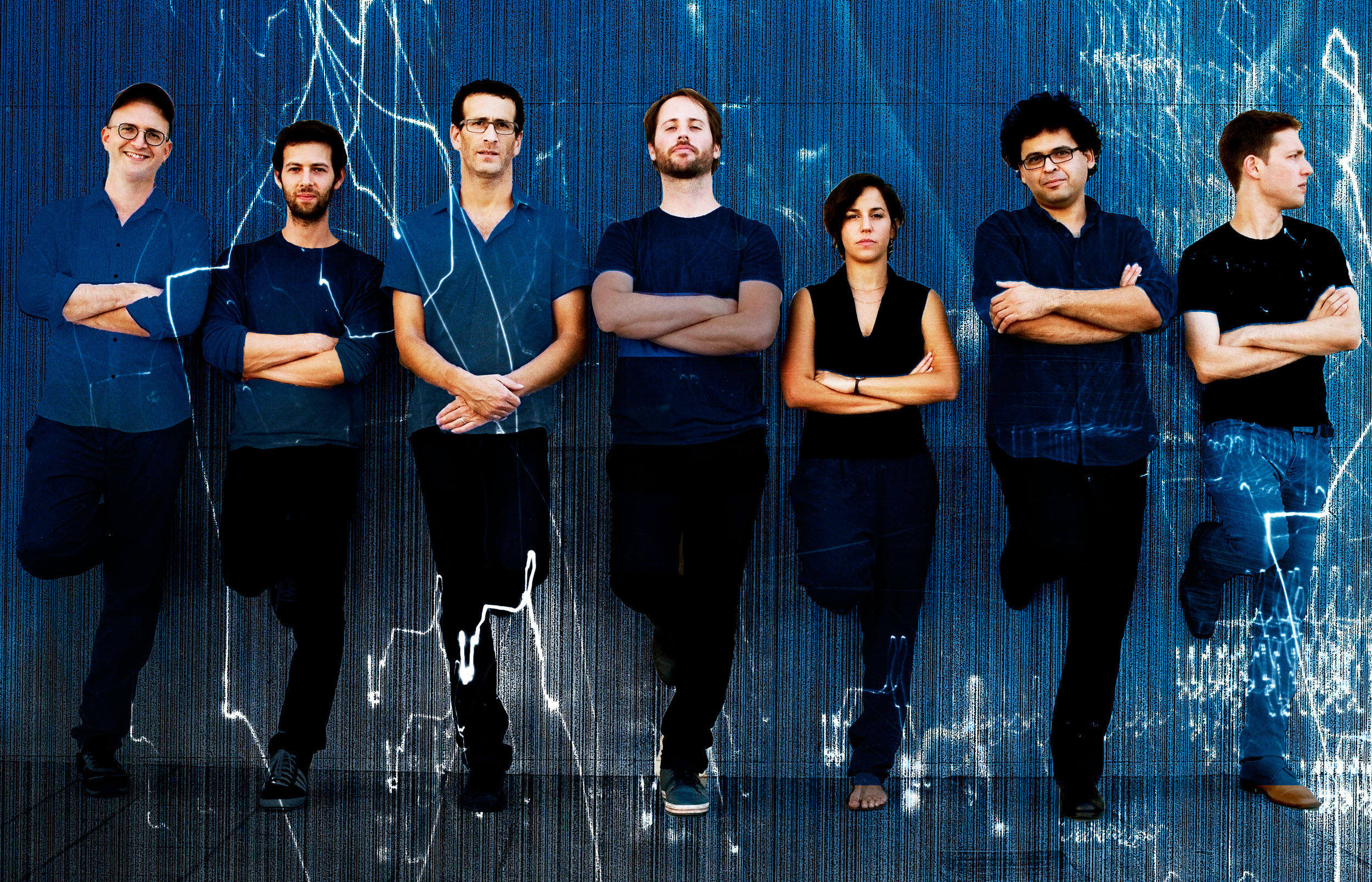
Meitar Ensemble, Tel Aviv

This means the project became more and more complex?
At some point I decided that, in addition to the French translation, I also wanted to work with the original Hebrew text. The voice is crucial in this piece. Job’s substance is incredibly exciting: he cries, curses, roars, fights, laughs, whispers, becomes insane, despairs, gives up. The piece ended up being sung and spoken alternately in both languages.

The two languages’ emotionalism is completely different though.
Exactly! With a singer, an actor and two languages, I had new parameters, several octaves, different acoustic colours that these languages transmit. Suddenly there were many more ways to deal with the text. I actually hadn’t noticed untill then, that I had assigned Job’s text to a female voice. In addition there are surtitles: in Tel Aviv Hebrew, in Basel and Zurich German, and in Geneva French.

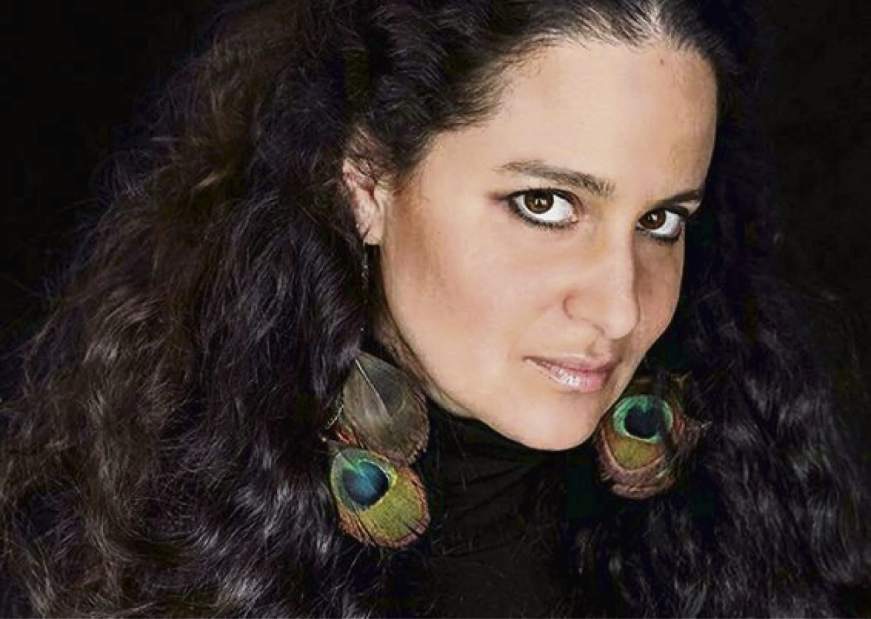
The singer: Tehila Nini Goldstein

What can the public look forward to?
To the great text by Hanoch Levin! And the wonderful Meitar Ensemble, the agile actor Zohar Wexler, the great soprano Tehila Nini Goldstein and myself. This coming together is a small miracle itself.

Why?
Because it is hardly feasible, logistically I mean! (laughs). We work in four different cities and stage in three different languages, which doesn’t make it easy.
Interview: Björn Schaeffner


Meitar Ensemble, Ondřej Adámek, ‘Ça tourne ça bloque’, Pierre-André Valade

« Les Soufffrances de Job » is part of the two key themes of Gare du Nord’s current season, ‘Musiktheaterformen‘ and ‘Later Born‘: « Musiktheaterformen » illustrates aspects of contemporary music theatre in presentation and conversation. ‘Later born’, on the other hand, deals with the great traumas of the 20th century – National Socialism, the two world wars and their consequences – mirrored by the questioning look of those born after them.

The premiere in Basel will be followed by a panel discussion with Michèle Rusconi and Matthias Naumann (translator, publisher and author of a publication on Hanoch Levin).

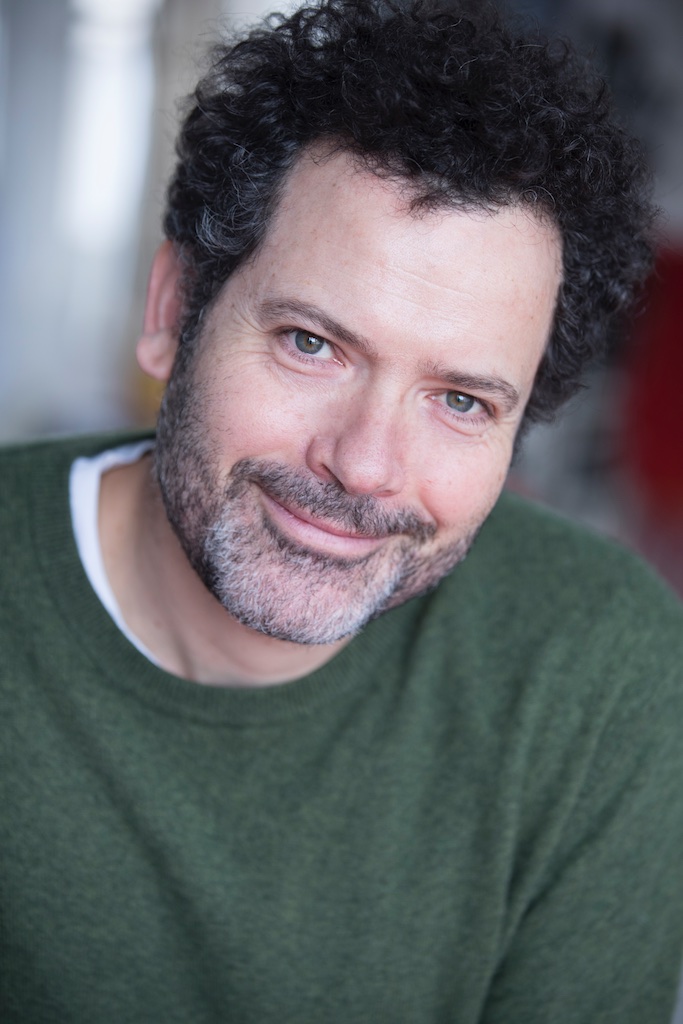
The actor: Zohar Wexler

dates:
5. 12.19, 20:30h Tel Aviv, Inbal Multi Cultural Ethnic Center
7.12.19, 20h Basel, Gare du Nord
9.12.19, 19:30h Genève, Salle Ansermet
10.12.19, 19:30h Zürich, Kunstraum Walcheturm

Gare du Nord, IGNM Basel, Kunstraum Walcheturm, Meitar Ensemble

neo-profiles: Gare du Nord, Michèle Rusconi

Pling! Plong! Brrr!

Michael Pelzel

Composer Michael Pelzel is currently polishing the final details of his first opera for the Opernhaus Zurich. In this interview with Bjørn Schaeffner, he talks about the razor’s edge, zero energy states and that certain degree of lightheartedness work sometimes needs.

Michael Pelzel, how’s life?  
Very hectic at the moment, I am reaching my limits and I’m working from home right now. 

You’re on the home straight of your opera “Last Call”.
I can fortunately rely on a great team. It’s a joint effort. As an opera composer, one must always deal with other art forms as well. 

Have there been arguments?
Only on one particular issue. I personally had a dreamwalking final in mind for “Last Call”, some kind of gravity song, reminding both of a church chorale and a vocal quartet in the style of “Manhattan Transfer. I wanted to establish some kind of zero energy state at the end, but my partners Chris Kondek and Jonathan Stockhammer both believed that this had already been fulfilled earlier and wasn’t needed anymore at the end of the opera. They eventually convinced me. 

How did the idea for “Last Call” come about?
Author Dominik Riedo from Lucerne reached out to me and we developed the material together in an inspiring kind of ping-pong working procedure. Riedo’s text approached my music using an onomatopoeic, almost comic-like language. Pling! Plong! Brrr! 

In “Last Call”, humanity loses control over communication media and is therefore forced to dislocate to a distant planet.
I’m sure you’re familiar with this – I experience it day in day out. As soon as you’re done answering your 30 mails, the inbox is full again. We are literally being attacked from all sides and on every possible channel. Then there are tech giants like Amazon or Google, who know more and more about our lives. It makes one wonder. 

The programme brochure defines the opera as grotesquely exaggerated.
Yes, the idea is to get quirky, somewhere between Dürrenmatt’s “Die Physiker” or “Le Grand Macabre” by György Ligeti. I was also inspired by Christoph Marthaler, in whose productions you often don’t really know whether he’s being serious or not. I like walking on the razor’s edge. 

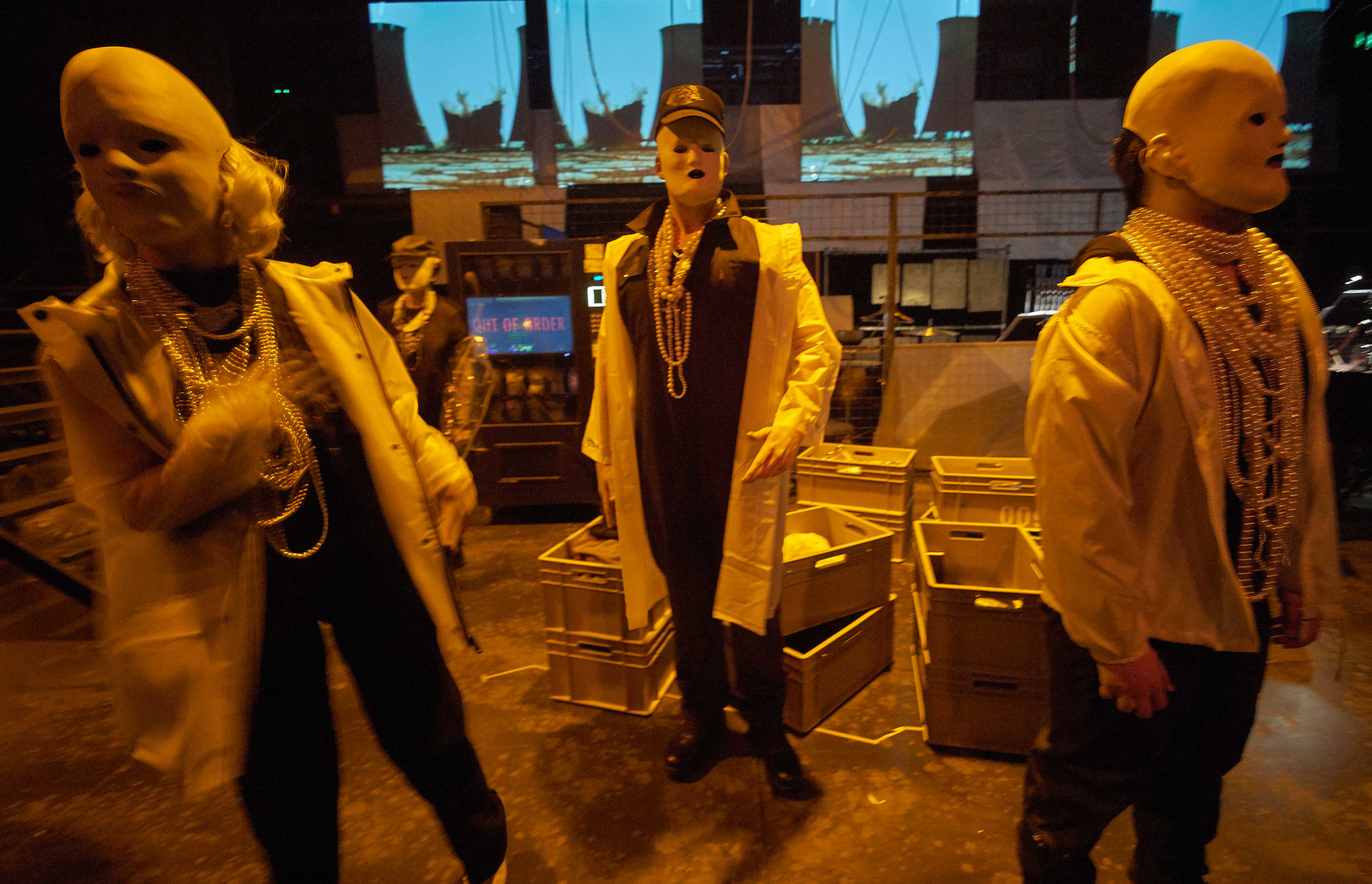
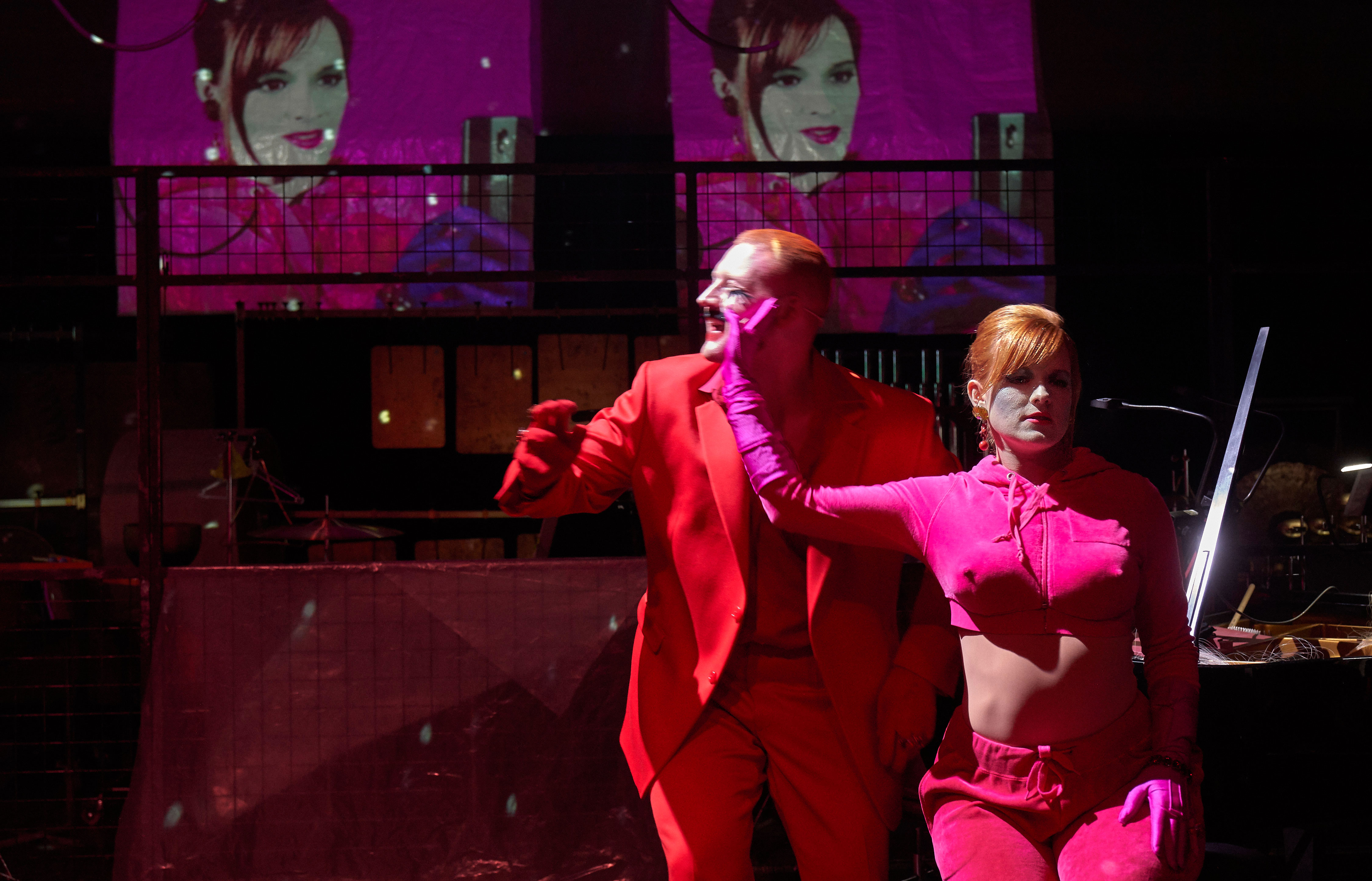
Michael Pelzel, Last Call, UA 28.6.19, Opernhaus Zürich ©Herwig Prammer

How did you approach “Last Call” in terms of composition?
Many composers are in despair, hopelessly trying to harmonise each and every musical parameter. I believe one has to set to work with a certain degree of lightheartedness and knowing that for a 90-minute work, you can’t compose every note from scratch. I therefore developed and dwelled upon already existing themes and worked in theatrical sense of course.

What bothers me in contemporary opera is this latent tragedy and almost clichéd profundity that’s pervading everything. I wanted to work against that, so I took the liberty of being a little cheekier here and there.  

Cheekier?
We slightly altered the “Sendung mit der Maus” melody for example. This is nothing new of course; variations within a composer’s own musical language can be found in Mozart’s works and Wagner sometimes suddenly and surprisingly tapped into baroque elements. 

What can the public look forward to?
I am curious too, about how it will all come together. The child must stand on its own feet and then take flight. But the public can certainly look forward to Chris Kondek’s video art. He has this great way of conjuring a trashy kind of pop art into the opera with very few means. Then there’s the stage design by Sonja Füsti, highlighting video art very well and Ruth Stofer’s costumes everything actually. As said: it’s a joint effort.
Interview by Bjørn Schaeffner

Michael Pelzel, Last Call, UA 28.6.19, Opernhaus Zürich ©Herwig Prammer

Opernhaus ZürichMichael Pelzel

broadcasts SRF
29.Juni 2019: “Musikmagazin“, Kaffee mit Michael Pelzel (auch als Podcast)
1. Juli 2019, “Kultur-Aktualität“, Bericht zur Premiere; “Kultur Kompakt

neo-profilesMichael Pelzel, Opernhaus Zürich, Jonathan Stockhammer, Philharmonia Zürich