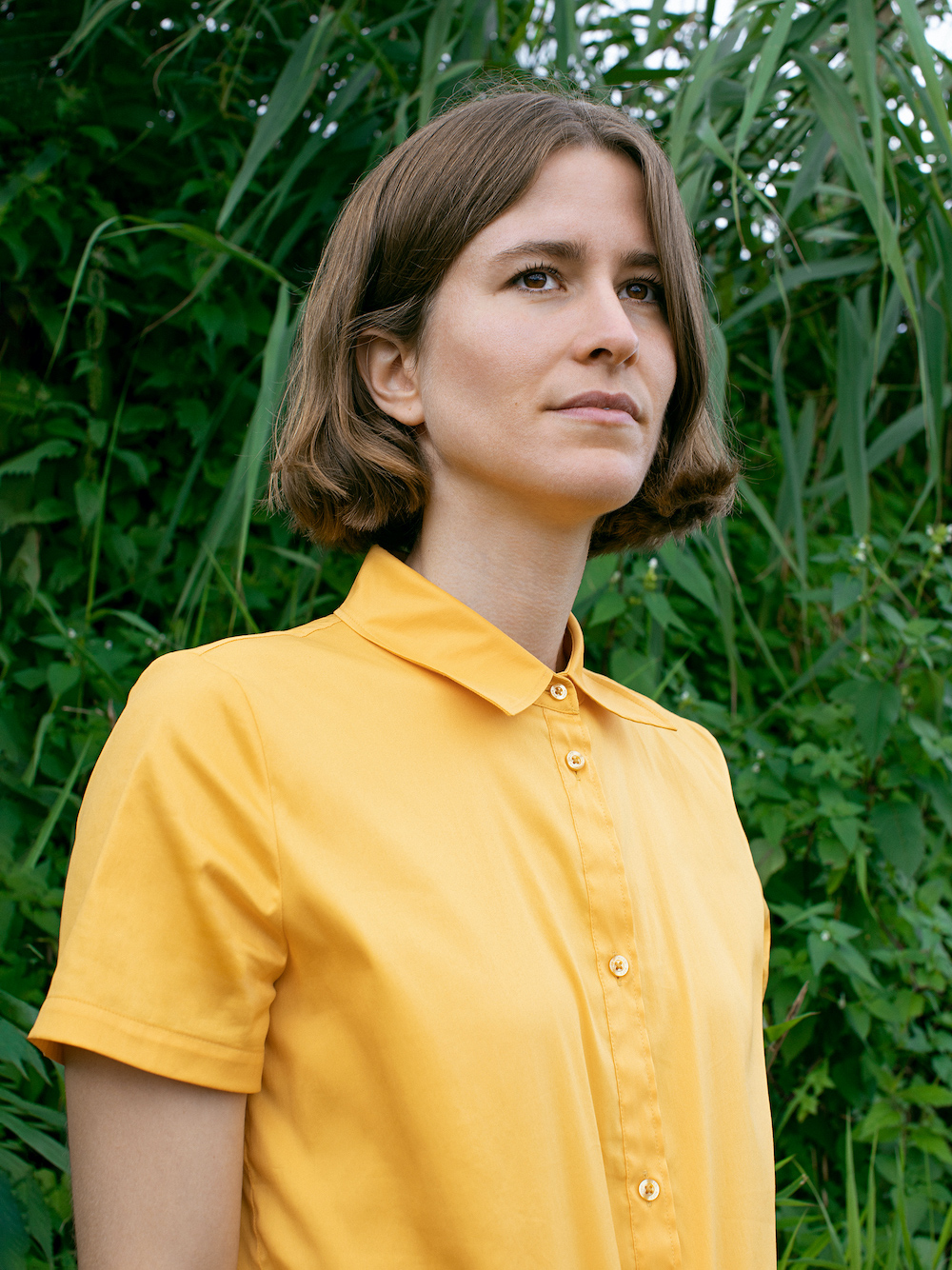
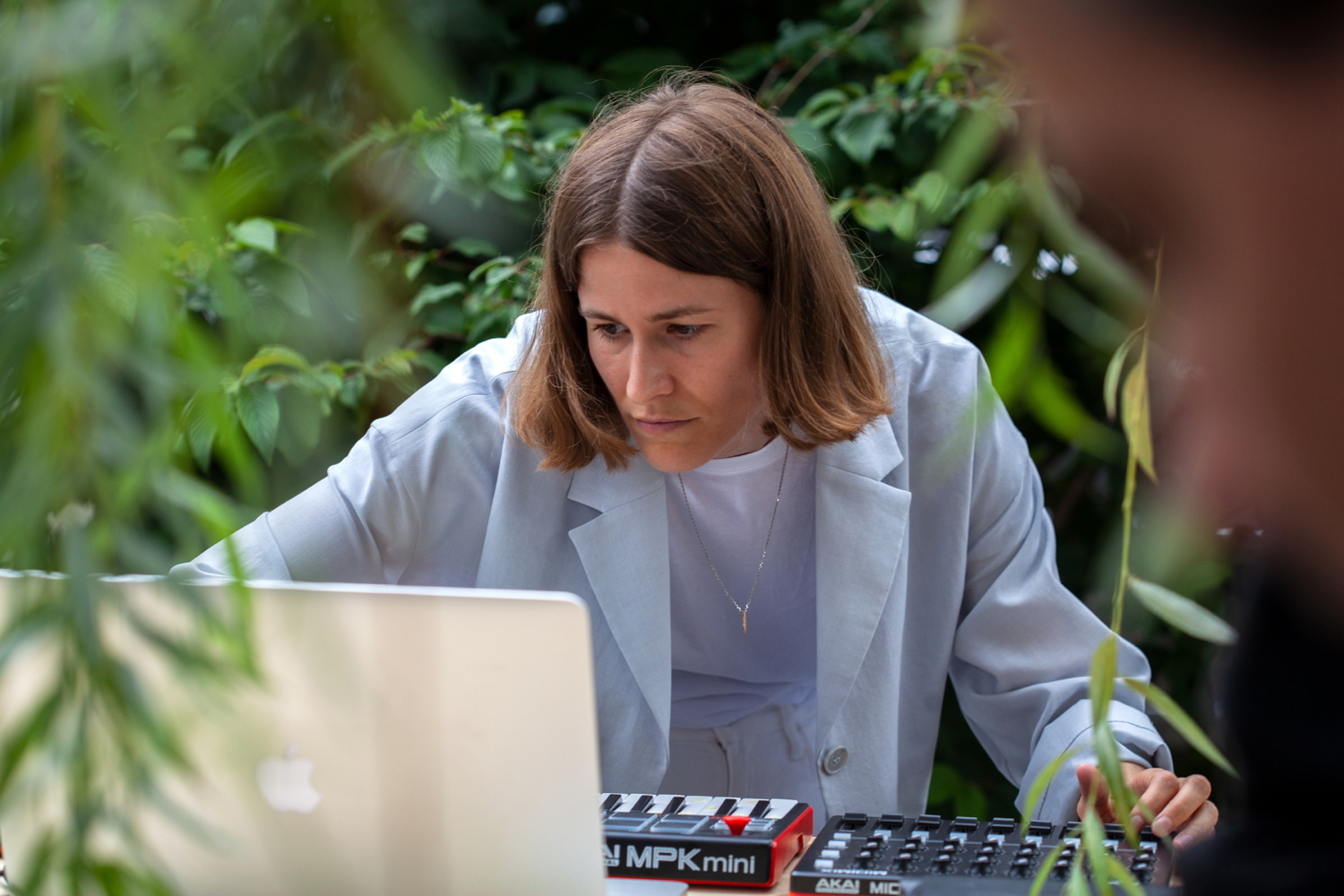
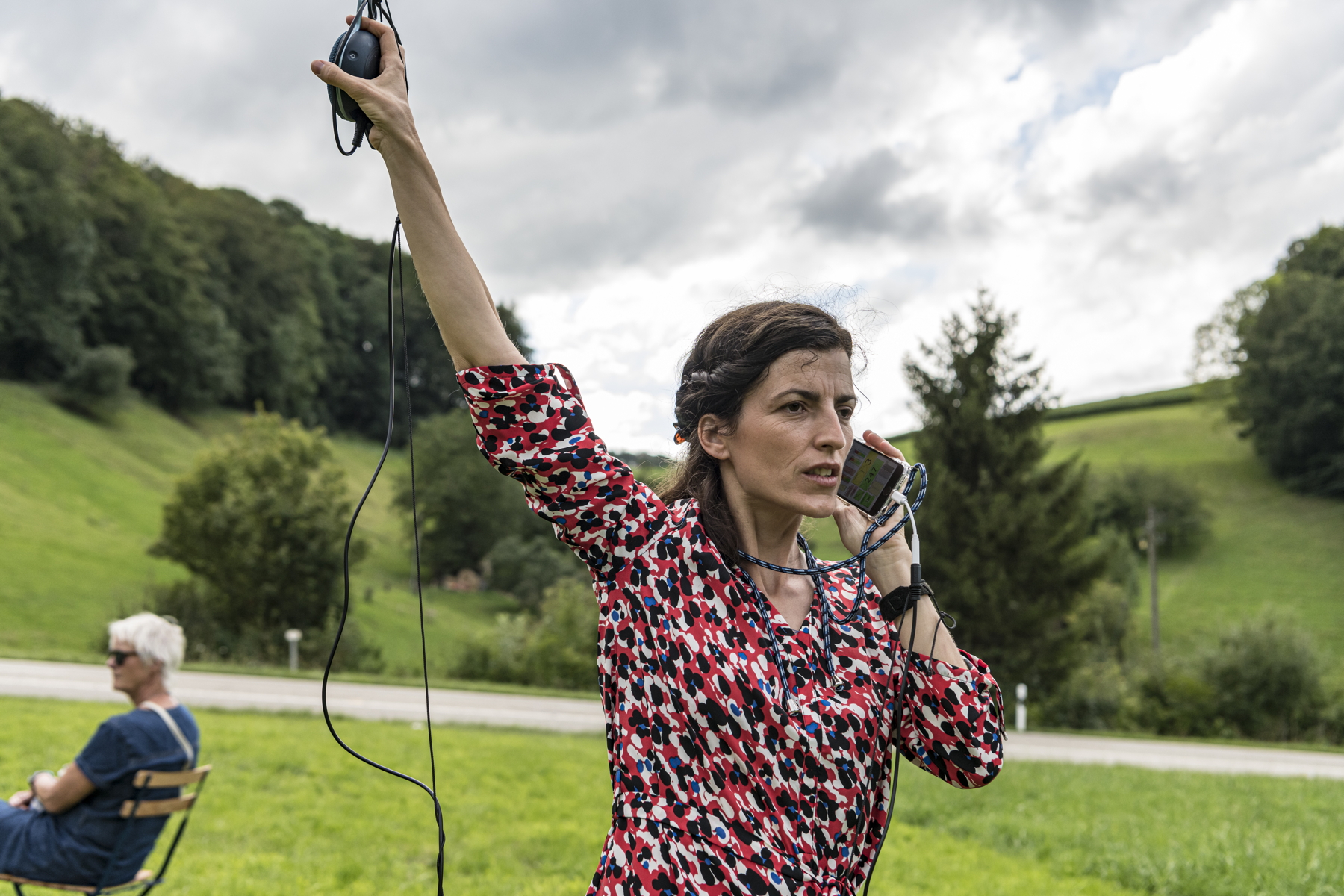
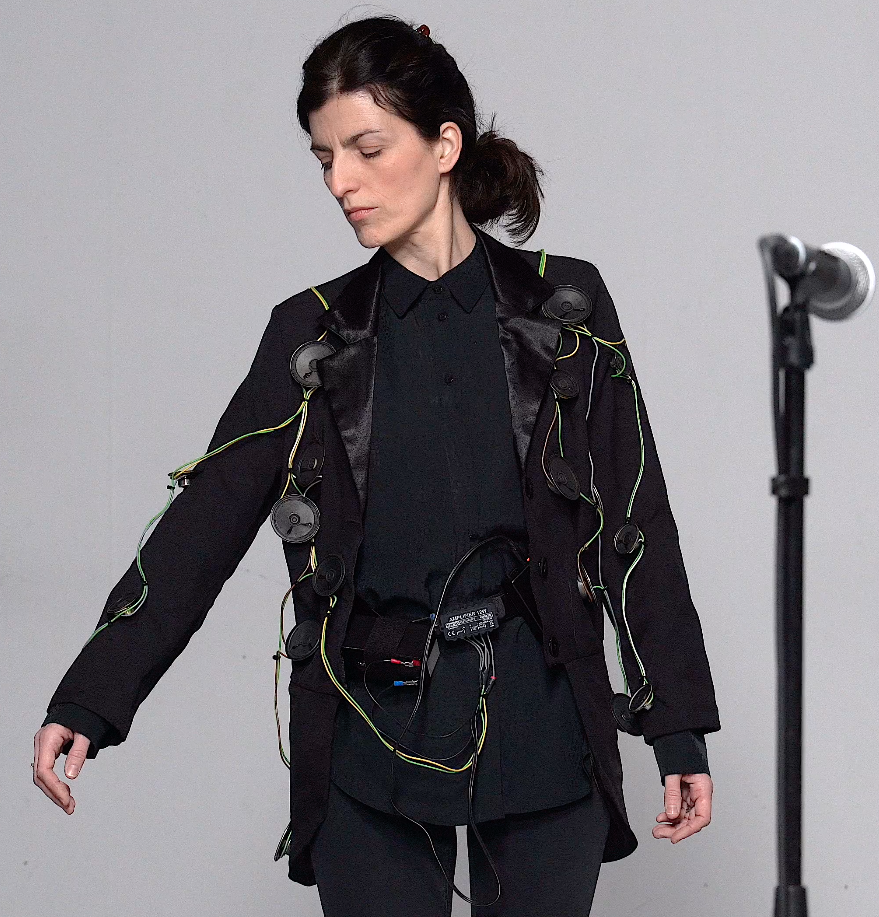
Merlin Züllig, alias Merlin Modulaw, describes himself as a ‘sonic architect’. Born in Zurich and now based in Paris, he studied composition and sound design in Switzerland and explores new artistic spaces with his combinations of acousmatics, 3D sound, sound design and pop references.
Music of the future – escaping the Zeitgeist this is the title of a project to celebrate SUISA’s 100th birthday. 40 Swiss musicians were asked to write down their ideas regarding music that will be premiered in a hundred years’ time: A greeting from the present for the year 2123 to hopefully mark SUISA’s 200th birthday. The project was presented at the Yehudi Menuhin Forum in Bern on 16 April 2024. Bettina Mittelstrass spoke to the musicians involved.
Gabrielle Weber: workshop with Arditti Quartet at ZHdK
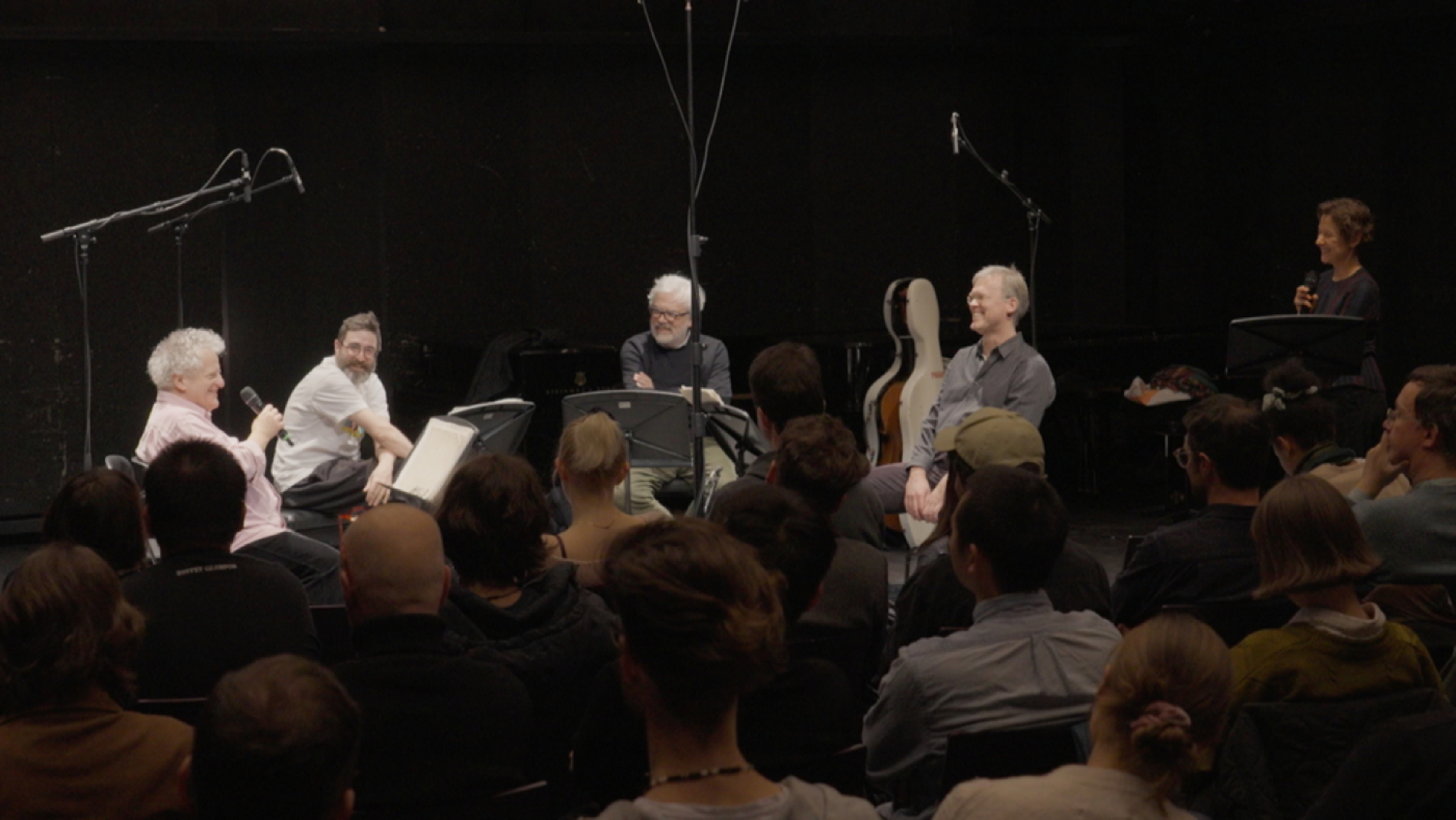
The London-based Arditti Quartet is synonymous with contemporary music for string quartet. Since 1974, the ensemble led by violinist Irvine Arditti, dedicates itself entirely to the contemporary repertoire, both through concerts and recordings as well as in its work with young composers. At the end of February, during a stop on the quartet’s 50th anniversary concert tour, I accompanied the four musicians to a public workshop at the Zurich University of the Arts (ZHdK).
Das Arditti Quartett at the Lecture Performance with Isabel Mundry at ZHdK, 28.2.2024 Foto zVg. ZHdK
The man that developed electronic music in Switzerland like few others and always managed to surprise us with fresh ideas: Thomas Kessler.
It was announced today that the Swiss composer has passed away at the age of 86. An obituary by Thomas Meyer.
Thomas Meyer A rapper and a string quartet – rather unusual combination. In 2007, Californian slam poet Saul Williams appeared with the Arditti Quartet at the Tage für Neue Musik Zürich to perform the piece NGH-WHT. It was not his first time performing in a classical setting. Two years earlier, he had already recited his texts with an orchestra in Basel, in Said the shotgun to the head. Both pieces were written by Thomas Kessler.
The Colombian-Swiss composer Daniel Zea understands sound as a plastic material. In his work, he combines sounds, movement, electronics and video with digital setups. A portrait by Jaronas Scheurer.
Jaronas Scheurer “I compose more from a designer as from as a composer’s point of view,” says Daniel Zea during our interview. “I’m interested in things like symmetry and asymmetry, ergonomics and balance and sound is a plastic material to me.” He also studied industrial design in Colombia before going on to study composition with Harold Vasquez-Castañeda in Bogotá. He then came to Geneva and finished his studies with Eric Gaudibert at the haute école de musique (HEM) and also studied at the Institute of Sonology in The Hague for two years before co-founding Ensemble Vortex and starting his teaching carreer in interactive design at Geneva’s HEM: Daniel Zea’s CV is therefore long and varied – industrial designer, composer, audio designer, media artist and programmer.
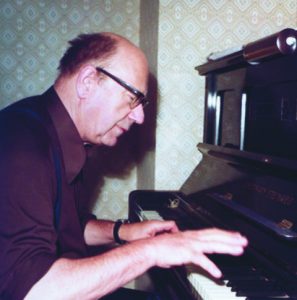
Hermann Meier (1906-2002) was a school teacher in the village of Zullwil in the so-called Schwarzbubenland and had five children to feed. Despite all this, he always found time to work on his unusual compositions – even if initially merely destined to sit on a shelf, as he experienced no major successes or performances during his lifetime. His legacy has been analysed by musicologist Michelle Ziegler.
Friederike Kenneweg
‘It all started when I first heard Hermann Meier’s during a concert back in 2011,’ recalls Michelle Ziegler, ‘I was immediately fascinated by it.’ Back then, Tamriko Kordzaia and Dominik Blum played Hermann Meier’s Thirteen Pieces for Two Pianos from 1959.
‘These are thirteen separate sections with very different characters. At that time, I was already working on the realisation of artistic ideas in music, and I found this to be consistently implemented here.’
The Thirteen Pieces for Two Pianos reveal the multifaceted nature of Hermann Meier’s music, which can be loud and direct, but also delicate and sometimes humorous. Tamriko Kordzaia, Dominik Blum, Concert 19th of May 2011, Museum für Gestaltung Zürich, produced by SRG/SSR.
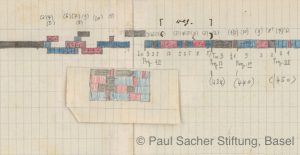
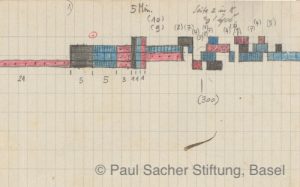
When Michelle Ziegler learned that the composer’s works were sitting largely unexplored at the Paul Sacher Foundation and that there all kinds of graphic plans were to be discovered there, she found her dissertation project. “That ended up being the focus of my project: Meier’s piano music and his pictorial notation.”
In order to be able to read Meier’s notes, Michelle Ziegler even learnt a special shorthand writing. The composer, who had unlimited access to exercise books as a primary school teacher, constantly recorded his thoughts in this form: on music, contemporary art and the progress of his work.
‘You could almost call him a graphomaniac,’ says Michelle Ziegler. The large number of exercise books, plans and sheet music that are now in the Paul Sacher Foundation could keep one busy for a lifetime.
At odds with his time’s music scene
The fact that, despite his constant productivity, Hermann Meier received little recognition during his lifetime is due to his unconventional compositional path. He had been studying twelve-tone music on his own since the 1930s and initially found a sympathetic teacher in Wladimir Vogel after the Second World War. However, he increasingly turned away from it, first finding an even more radical approach to serial composition and finally, inspired by the visual arts of Piet Mondrian and Hans Arp, moving on to work with sound surfaces. From 1955 onwards, Meier worked with graphic plans in which he visually sketched the structure that he later translated into musical notation.
His way of composing encountered little understanding at the time. Although endeavouredly searching for performance opportunities, he only received rejections, but nevertheless continued to compose unwaveringly, although only for the shelves.
Keyboard instruments play a central role in the Meier’s work, as he was himself a very good pianist. A work that Michelle Ziegler particularly appreciates is the 1958 piece for two pianos (Hermann Meier-Verzeichnis HMV 44).
“This is a stunning piece in my opinion. I can listen to it again and again and always hear different things.”
In the piece for two pianos HMV 44 written in 1958, here played by von Tamriko Kordzaia and Dominik Blum, Hermann Meier experimented with three structural elements dots, lines and areas.
The fact that Meier’s efforts to have his works performed did not bear fruit was also due to the fact that they were too difficult for the instrumentalists of the time. It is therefore not surprising that the composer turned to electronic music. In 1976, at the age of seventy, he indeed succeeded in realising his first work for tape, Klangschichten, in the SWF experimental studio – with which he was awarded a prize in December of the same year.
A new style in his later years
From 1984 onwards, pianist and composer Urs Peter Schneider took an interest in Hermann Meier’s music and premiered some of his works as part of the ‘Neue Horizonte Bern’ concert series.
Piano piece for Urs Peter Schneider, played by Gilles Grimaitre
With the late opportunity to see his instrumental pieces performed, Hermann Meier once again developed a new style. Michelle Ziegler discovers this, for example, in the Piano Piece for Urs Peter Schneider from 1987.
Concert HKB Bern 2017, SRG/SSR Eigenproduktion.
“The rhythm as well as the element of duration became very important. By then he was already over eighty and changed his composing considerably because he became even more fascinated by other aspects.”
In the meantime, Hermann Meier’s work has received a fair amount of attention. In 2018, his piece for large orchestra and piano four hands from 1965 was premiered at the Donaueschingen Music Festival. Michelle Ziegler particularly enjoys concerts like this. “It’s important to me that Hermann Meier’s music doesn’t just remain on paper, it should be heard.” Friederike Kenneweg
Simone Keller brings music history’s hidden gems to light
Black, gay and provocative: Julius Eastman (1940-1990) shredded the surface of cultivated minimal music. With his confessional music, he burst into the bubble of New York’s white avant-garde. With the Kukuruz Quartet, Swiss pianist Simone Keller made a significant contribution to his rediscovery and is also committed to other “forgotten” piano music.
Corinne Holtz At the time Julius Eastman improvised for over an hour in Zurich’s Rämibühl auditorium, Simone Keller was three years old. The painter Dieter Hall had invited the unknown pianist, composer, singer and performer to make his Swiss debut back in 1983, before he himself would immerse himself in the buzzing metropolis for decades.
Eastman left a “disturbed” audience behind and presented his host with a sketch entitled fugue no 1, which the Kukuruz Quartet will analyse years later together with other transcripts, photos and recordings. The “Eastman passion” set in. It promoted arrangements and interpretations of pieces “that were not yet known even to insiders”, says Simone Keller.
These include Buddha (1983), which imposes 20 individual voices to be realised simultaneously by performers without specifying particular instruments or number of performers. The Kukuruz Quartet has opted for preparations that enable sound surfaces in pianissimo on the threshold of audibility.
Gay Guerrilla (1979) with its wild mix of jazz harmonies and Luther chorale, a reflection of Eastman’s questions about life, is completely different. “I struggled with God for a long time”, he said in an interview and he hoped to make peace with him one day. His pan-religious spirituality also found its way onto the stage. In 1984, for example, he performed the solo The Lord give it and the Lord take it away, a 15-minute prayer in deep earnest.
The Kukuruz Quartet performs Gay Guerilla by Julius Eastman in 2019 at Brown University, Providence, Rhode Island, USA.
Crossing boundaries, styles and conventions
Eastman transcends the boundaries of styles, genres and conventions and leaves behind music which can be defined as protest turned into sound. This is particularly true of the ‘Evil Nigger’ trilogy, the title of which caused African-American students to protest on the campus of Evanston’s Northwestern University (Illinois) in 1980. They demanded the “N”-word to be removed from the programme. Eastman addressed the audience before the concert and gave historical reasons for his linguistic racism. He used the offensive word to visualise the role of African Americans in US history. “The foundation of the country’s economic rise is built on the labour of African Americans, especially field niggers.” For 250 years, slaves had generated wealth for whites, while they – as black people – were generally being denied both ownership and education.
Eastman was punished by his own community for speaking his mind. Is there a mechanism at play that we encounter in the cancelling of unwanted opinions to the present day? “No,” says Simone Keller. “Eastman wanted to provoke and demonstrate why it is important to think about these titles and their explosive power.” It is true that in the course of “cultural change, we are becoming more sensitive” to traditional racism, including in language.
Run-down pianos make painful beauty audible…
The Kukuruz Quartet was the first to discover Eastman for Europe and initially played his music in clubs, bars and breweries – on four “run-down” pianos that have already survived many preparations and, with their “battered resonating bodies, offer enough resistance” to be able to show the “repetitive fury” with simultaneous painful “beauty”.
They thus did justice to music fuelled by drug excesses that resounded through the streets during the Black Lives Matter movement demonstrations and can now be heard in established concert halls. MaerzMusik in Berlin kicked things off in 2017, and the Lucerne Festival Forward recently followed.
We do not know what this visionary eclectic would say about the establishment’s recognition. He ended up spending the last years of his life in a homeless camp in Tompkins Square Park in New York and died forgotten in a Buffalo hospital in 1990.
“As a white musician, I also feel obliged to play music by people of a different skin colour,” says Simone Keller. During her studies, she only played music by white men, even in the 2000s, when a few white female composers had already been rediscovered, such as Clara Schumann, Fanny Mendelssohn and Lili Boulanger.
It’s high time to remember African-American female composers such as Irene Higginbotham and her most famous composition Good Morning Heartache (1945) and to make “inequality and power relations” visible, says Simone Keller, titling her latest CD and book ‘Hidden Heartache’.
Irene Higginbotham (1918-1988), Good Morning Heartache, interpreters Simone Keller, Klavier and Michael Flury, Posaune, 2024.
Unlike Julius Eastman, Julia Amanda Perry (1924-1979) belongs to the forgotten composers. The African-American pianist, composer and conductor celebrates her 100th birthday on March 25. After her basic training at Westminster Choir College Princeton, she studied in Europe with Luigi Dallapiccola and Nadia Boulanger, was a Guggenheim fellow in Florence and conducted famous orchestras such as the BBC Philharmonic and the Vienna Philharmonic between 1952 and 1957. Nevertheless, hardly any doors were opened to Perry back in the USA. With ‘Hidden Heartache’, Simone Keller points to the structures of this forgetting and sheds light on piano music by those excluded from music history. Corinne Holtz
On March 25, 2024, Julia Amanda Perry’s birthday, a book as well as a double CD with 100 minutes of piano music from the last 100 years will be released, including works by Julius Eastman, Julia Amanda Perry, OIga Diener, Jessie Cox and others, Intakt records. CD: Kukuruz Quartet, Julius Eastman, Piano interpretations, Intakt records 2018.
Celebrating the 100th birthday of composer Luigi Nono.
Luigi Nono (1924-1990) is considered a central figure of the musicalal avant-garde. A portrait by Florian Hauser on his 100th birthday, January 29, 2024.
Florian Hauser
They all turned up, every single one of them. Several thousand workers gathered during their break in order to hear what Luigi Nono has created on the basis of their sounds and noises. He had recorded the blaringly loud roars and hisses of the blast furnace of their steel factory and was now presenting his tape collage to them. Afterwards, the workers discussed it and began to ponder about their working conditions. ‘La fabbrica illuminata’ is the name of the piece that Luigi Nono dedicated to the steel workers in Genoa in the mid-1960s. A prime example of participation, one would say today. Ultra-modern, even to this day. That has always been Luigi Nono’s aim: he made music to create political awareness.
Luigi Nono was born into an educated Venetian middle-class household. When he was one year old, Benito Mussolini became the fascist dictator of Italy, which characterised Nono’s entire development, indeed his whole life. He wanted to fight against oppression, war and social injustice. The fact that he did is as a composer – he states – is only a coincidence, as he connected with the musical avant-garde after the Second World War.
It is a time of great change. A young generation of composers wanted to create a new musical world; the old expressions had had their day, clear structures were needed, as well as new compositional techniques and tools such as electronics.
Darmstadt in Germany became an important centre of the new emerging avant-garde.
Luigi Nono, Incontri für 24 Instrumente, UA 1955, in house-production SRG/SSR. In 1955 – Nono was already firmly involved in the Darmstadt Summer Courses – he wrote a musical love declaration to his future wife, Nuria, Arnold Schönberg’s daughter: ‘Incontri’ for 24 instruments, the encounter of independent musical structures. ‘Just as two independent beings, different from each other, meet and though their encounter cannot become unity, it is still a meeting, a togetherness, a symbiosis’. After the premiere in Darmstadt, Nuria Schönberg and Luigi Nono became engaged and married shortly afterwards.
Three composers become the central figures at Darmstadt’s so-called ‘International Summer Course for New Music’: the Frenchman Pierre Boulez, Karlheinz Stockhausen, from Germany and Luigi Nono.
What initially began as a wonderful and intense artistic friendship soon changed and differences became apparent. Nono did not wish to make “l’art pour l’art”, like his colleagues. He wanted to get out of the ivory tower, onto the street, to the people. And set, for example, farewell letters from resistance fighters sentenced to death to music….
“The human, the political cannot be separated from music”
“The human, the political cannot be separated from music”, Luigi Nono used to say. He tried ever more urgently to put his finger on social grievances, using all musical means at his disposal: wild orchestral impulses, sounds on the verge of silence, collages, electronics or music that spreads throughout the room.
“To awaken the ears, eyes, human thinking, intelligence, the greatest possible inwardness’” these are the words Nono used to describe his eternal goal in 1983, ‘”to bear witness as a musician and a human being”.
Luigi Nono, No hay caminos, hay que caminar, UA 1987, in house-production SRG/SSR: Nono had read the phrase ‘Caminantes, no hay caminos, hay que caminar’ (Wanderer, there is no path, you just have to walk) on the wall of a monastery in Toledo. This became his last orchestral work and the title could almost stand as a motto for Nono’s entire compositional work. No hay caminos, hay que caminar. The dynamics and tempo are extremely restrained, with dramatic cracks in the sound emerging only for brief moments. Nono uses only the note G, with quarter-tone increases and decreases, i.e. seven notes at quarter-tone intervals in all octave ranges. The differences between pitches and timbres disappear; it is a magical game that radically rethinks the relationships between parameters.
His life, just as his music and music-making, is exhausting… and Nono was ultimately broken by his own demands. ‘I proceeded to self-destruction,’ he would say at the end and when he died in his mid-60s, he had to realise that even music cannot trigger revolutions.
What could be considered his legacy? His uncompromising attitude. His motto. Ascolta! Listen up! Florian Hauser
Lucerne born Martina Lussi studied art and through listening she got into producing sound art and music herself. She explores nature and everyday life with microphones and an audio recorder and taking her impressions back to the studio, she condenses her listening experiences into installations, performances and studio albums, as well as field recordings and soundwalks.
Friedemann Dupelius
At the beginning of our Zoom conversation, Martina Lussi admits that she feels a bit disorganised. She is currently working a lot in an art library, so she is lacking time to listen and engage with sounds, which is a very important aspect to her. “Listening is something that happens very slow. You can’t just quickly listen to something – you have to start from the beginning and absorb it, otherwise you lose the context. Who really has time to listen these days?”
To get in the right mood for our conversation, she has turned her routine route around Lake Lucerne into a soundwalk this morning – in other words, a walk during which you actively listen to your surroundings. She reads out her listening log to me like a shopping list: “Trolleys, conversations, a jogger running past, my jacket, a dog breathing, ship masts, a person imitating a duck…” We both realise that we can imagine the individual sounds, but that such a description lacks one thing: the spatiality and simultaneity of the scenery. “My music thrives on the fact that many different sounds combine and flow into one another. It’s like a stream in which sounds are suddenly very close, only to dissolve into something else again.”
Frogs or wood?
At the end of 2019, Martina Lussi spent a residency in the Brazilian rainforest, where she was able to immerse herself in an unknown soundscape. “Some of the sounds were unsettling because I didn’t recognise them, especially at night. There was a frog for example, that sounded like wood – someone had to explain that to me first.” Her composition Serrinha Do Alambari Soundwalk is based on an audio walk in the village of the same name.
Footsteps of a group of people crunch on uneven ground and set the rhythm, over which one can hear various birds chirping. Gradually, a synthesiser rises like wafts of mist from the soundscape of the rainforest and merges into gentle tropical rain, until at some point the frogs chatter. Martina Lussi is not interested in reproducing the environment as it apparently sounds in reality – she adds artificial sounds and thus creates new sound spaces, such as dreamlike memories. She sometimes does not bother to cut out the wind that blows into the audio recorder. Some field recording purists would consider this a bad recording, but not Martina Lussi.
The composition Serrinha Do Alambari Soundwalk was released on vinyl in 2020 on the label Ōtium, along with a piece by Loïse Bulot.
Coat or birds?
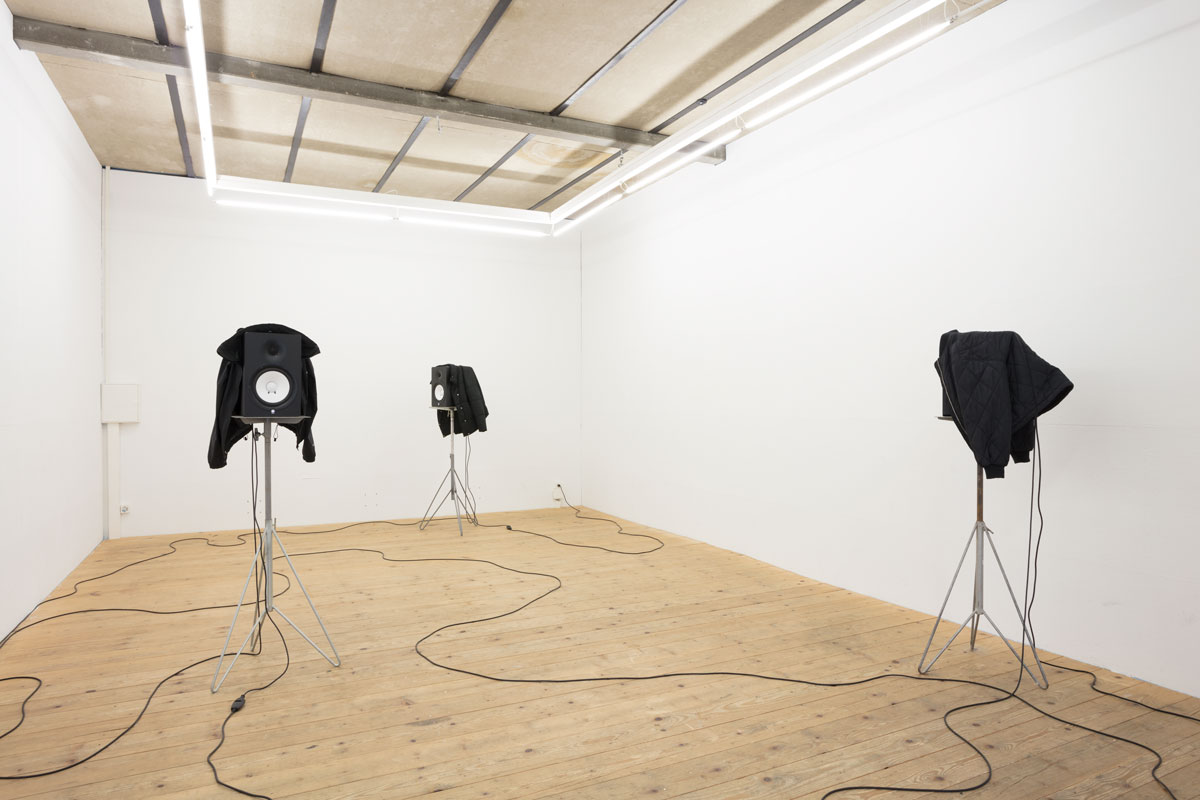
On the contrary: she repeatedly incorporates unwanted background noises into her compositions. In her piece The Listener, these even become the sole material. It consists exclusively of sounds produced by coats. They became the focus of Martina Lussi’s attention while making recordings in nature as part of a research project on bird sounds: “You imagine it to be so idyllic, but early in the morning it’s often so cold that I’m freezing and have to keep moving. As I’m wrapped up in a thick jacket, it just resonates.” She realised that these sounds often sounded like the voices or even the beating of birds’ wings. She took four jackets, improvised with each one for ten minutes and used them to create a four-channel installation and composition.
The piece The Listener is part of the compilation Synthetic Bird Music and was released on tape in 2023 on the label mappa.
Martina Lussi does not consciously sharpen her ears with listening exercises before she goes into the field: “It happens very casually. When I go into the forest, I smell the oils from the trees, I can’t see far, I automatically enter an attentive state that I don’t have to prepare myself for.” As vividly as she talks about the Brazilian rainforest years later, it becomes clear that listening goes beyond the moment. It creates memories that last for a long time and that you can draw on even in more turbulent times. Friedemann Dupelius
Electronic composition, performance, sound art: Zurich-based composer, performer, media artist and flautist Lara Stanic is hard to categorise. In her concert performances, she combines media, instruments, objects and musicians’ bodies and refers to specific locations and contexts. In this interview, she gives an insight into the creation of her latest works for the Zurich Baroque Orchestra.
Gabrielle Weber I meet Lara Stanic for a cup of coffee at her kitchen table on a snowy Saturday morning at the beginning of January. We talk about her latest composition ‘Du matin au soir’: it was written in summer 2023 for the Zurich Baroque Orchestra and consists of eight sound interventions that were performed between individual symphony movements by Haydn. The concerts took place at different times of day in various Zurich locations: the botanical garden, an outdoor swimming pool and in St Peter’s Church.
Lara Stanic generally uses electronic media for her pieces and often also integrates context-related objects. The selection of specific media is a process, says Stanic. “I let myself be inspired by the context, the performers, the instruments and the way they can be played. This generates sounds in my head and I conceive ways of playing.”
In Sonnenstand, the sound intervention to Haydn’s symphony Der Mittag, the musicians ‘play’ with round portable mirrors that produce sound using smartphones. The idea came from a childhood memory. “As a child, I used portable mirrors to catch the sunlight at noon and create shadows and light reflections on a nearby wall,” says Stanic.
In Sonnenstand, the musicians also capture sunlight with mirrors, but this time turning it into music. Mobile phones are attached to the back of the mirrors. Built-in motion sensors, microphones and loudspeakers capture the movements of the mirrors and convert them into sounds. Stanic explains that this creates a hybrid form of two the media, mirror and smartphone.
Sonnenstand thus also reflects a basic theme characterising Stanic’s artistic work: In electronic music, she is often bothered by the clumsiness of large, almost threatening loudspeakers and mixing consoles. By using mobile devices, she searches for lightness and mobility. Stanic also often appears as performer of her own works. She first tests what she develops on herself. “I always was and still am my best guinea pig,” she says.
Stanic first studied the flute, then music and media art in Zurich and Bern. She continues to play and teach the flute and sees it as her musical home. “My training as a performer and teacher provided me with a foundation and knowledge of compositional thinking. I am equally interested in creating sounds on acoustic as well as electronic instruments.” Her first access to music was through radio and television during her childhood in former Yugoslavia. Even back then, she was fascinated by the amount of emotions sound waves could trigger. The connection between music and electronics was therefore obvious, she adds with a laugh: “Of course, I didn’t realise it being about sound waves at the time.”
Kafi is all about transformation, the sound and aroma of coffee being transformed into music. In addition, there is an electronic extension of classical instruments, as the violin bows of the concert masters are equipped with motion sensors. They use them to touch the coffee machine like magic wands, which are then swung through the air. This amplifies the sound of the bubbling, spreads throughout the room and mixes with the beginning of the symphony. In her own words: “The violin bows become magic wands, which in turn transform the aroma of the coffee into music”.
The process behind it is very simple though. First there is the idea, then a sound, in this case the bubbling of the coffee and then she looks for solutions as to how this can be connected to the sound of the instruments. The performative actions of the concert masters form a bridge for the audience between the sounding everyday object and the instruments. Based on this simple principle, Stanic transforms everyday objects into music and leaves a lasting impression on my morning coffee. Gabrielle Weber
Lara Stanic is co-founder and member of the trio Funkloch featuring also PR and SH, which invites six composers each year to an experimental studio concert broadcasted live on air, or the GingerEnsemble, a Bern-based composer-performer collective. She composes for soloists, ensembles and orchestras, as well as for her own performances, which she regularly performs at international festivals and has been a lecturer in Performing New Technologies at Bern University of the Arts since 2011.
FunkLoch celebrated its sixth anniversary on Saturday, 20.1.24, 17h at Kunstraum Walcheturm with works by Annette Schmucki, Daniel Weissberg, Svetlana Maraš, Dorothea Rust and Joke Lanz.